
Goal For The Green

Para-education and green living information

How Green is the Internet?

Mar-4-2014 By Barbara Zak

Guest Post by Zeke Iddon

Yes, the entire Internet.

A fairly odd question, but one that will probably give you pause for thought; in a world where the phrase ‘global warming’ is synonymous with SUVs, air conditioning and poor recycling, it isn’t often that we consider one of the most widely-used resources ever to grace the planet.

So, how green is the Internet? The answer will probably surprise you…

The Case Against

Putting aside for one moment the amount of energy used to power offices and home computer set-ups around the world, the data centers which they access are worth examining.

Forming the core of the ‘net, these data centers are absolutely gigantic – many are the size of large shopping malls – and house rows and rows of power-hungry cabinets as well as the systems which keep them cool.

It’s difficult to quantify exactly how much CO2 is produced globally since it can vary wildly depending on what power grid they derive their energy from (for instance, if a country runs its electricity grid via fossil fuels), but our best estimates put the worldwide CO2 emissions from data centers at around 80 megatons.

It’s a hard number to visualize, but to put it into perspective these data centers account for 1.5% of all the world’s electricity (as of 2010). By 2020, it is predicted that the emissions put out by all of the data centers on the planet will quadruple, making this sector of industry a bigger pollutant than the airline industry.

But if you think that sounds extreme, consider this: data centers are only 10% of the equation.

90% of the pollution is generated within our own homes.

Connecting to a network wirelessly (either through routers or via mobile carriers) accounts for nearly 43.2 TerraWatts of all energy usage, which carries a carbon footprint equal to putting nearly 5 million new cars on the road.

With this in mind, it’s not surprising that having this technology in our homes has implications not just for the planet, but also our own health. There’s strong evidence to suggest that radiation emissions from WiFi routers and static towers has a tangible effect on the human body, which gives further rise to concern about our reliance on WiFi. These dangers – as well as the carbon footprint – are greatly mitigated by simply plugging into a router directly.

Obviously we’re not suggesting that the world shuts down the entire Internet, but at face value, the Internet appears to be one of the biggest – and most often ignored – drains on our resources, and something that should be used sparingly… or is it?

The Case For

In order to fully understand this tricky puzzle, we need to look at the bigger picture. Every activity uses up resources; what it really comes down to is how sustainable those activities and resources are.

We cannot begin to count the amount of hours spent watching cat videos on YouTube, or how much energy is used up by teenage girls pursuing One Direction on Twitter. But what we can quantify is the energy savings afforded to businesses on a practical level:

Increased connectivity allows for better telecommuting. Home offices typically use half the energy of a corporate set-up, and hugely telecommuting reduces emissions caused by traffic congestion.

This applies to numerous industries, too – particularly ones that are moving towards digitization. If you cut out the amount of unnecessary travel, and also factor in that telecommuting is proven to increase productivity, the Internet is very much a force for environmental good.

And while the amount of data centers needed to house the ‘net is on the up, so are their efficiency levels. In part driven by Green Peace activism (and for cost reasons), many of the big data companies – Google, Apple, Facebook, etc. – are striving to make their data centers more energy efficient.

According to a Standford report, the big players have the potential to reduce CO2 emissions by a huge 88%, and Apple have already managed to become carbon-neutral.

In Conclusion

So the question isn’t necessarily how green the Internet is, but more one of how green we can make it.

The answer for those of us at home?

Plug directly into your wireless routers, and try to work from home more often.

The planet will thank you for it.

Yes – Now Solar is Affordable!

Apr-9-2013 By Barbara Zak

You probably already know that installing solar panels is one of the best ways to make your home more energy efficient and environmentally friendly, but did you also know that you could wind up saving money in the process?

English: On 140 acres of unused land on Nellis...

English: On 140 acres of unused land on Nellis Air Force Base, Nev., 70,000 solar panels are part of a solar photovoltaic array that will generate 15 megawatts of solar power for the base. (Photo credit: Wikipedia)

The fact that solar can save homeowners money is driving increased interest on the part of consumers. Here are some surprising Facts on Who Goes Solar? According to the Solar Energy Industries Association, the U.S. residential solar market grew nearly 62%  (see chart) last year and isn’t expected to slow down any in 2013.

Are You ready to go solar at your home or business? Perhaps you didn’t know that the typical solar customer is changing, too. While solar panel buyers ten years ago focused on environmental benefits, today’s solar consumer is looking at other factors. Many homeowners today are buying solar for the same reason they’re buying hybrids: It saves money, and the choice to go with solar powered electricity these days just makes sense.

If you’ve been paying electrical bills for more than a handful of years, you are already well aware of the fact that those bills continue to increase every year and usually consume a large chunk of your monthly expenses.

The cost of solar panels has declined dramatically in recent years. According to Rhone Resch, president and chief executive of the Solar Energy Industries Association, the prices of solar panels decreased 60% last year, making it a more affordable option for many homeowners to consider.

Federal tax credits for solar installations have helped,too. Solar systems installed from Jan. 1, 2009 to Dec. 31, 2016 can get a tax credit of 30% off the cost. State and local incentives can even further reduce the cost of installing solar panels.

When calculating the cost of solar panels, homeowners should consider how much they’ll save on utility bills. Beware of solar installers though, that are overly aggressive in estimating how much you’ll save. Remember, any projection of utility bill savings is an estimate at best; it’s impossible to know how electric rates will fluctuate or how your home energy usage will change.

It’s unclear whether low solar panel prices are here to stay, but one thing is certain: There’s never been a better time to go solar. Now’s the right time to act on this current information. You can feel good about looking into your options for going solar and saving green.

About the Author: Ryan McNeill is president of Renewable Energy Corporation, which helps homeowners make the transition to solar power homes.

Enhanced by Zemanta

Benenson Showcases Sustainable Design

Feb-28-2013 By Barbara Zak

Congratulations to Benenson’s Continuing Commitment to Sustainable Design!

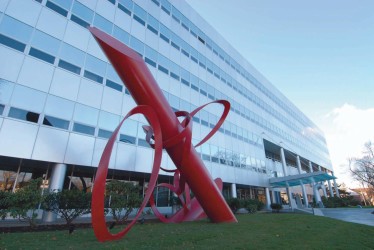
On February 14, 2012 an announcement was made by Richard A. Kessler, Chief Operating Officer of Benenson Capital Partners LLC. They are one of the nation’s oldest privately-held real estate investment and development companies. The announcement was made at their  five acre campus located at 1600 Summer Street, in Stamford, CT. The highlight of the announcement was the installation of their state-of-the-art rooftop solar energy equipment and paneling at the six-story, 260,000-square-foot, technologically-advanced  property.
1600 Summer Street

Benenson commissioned energy leader Elliot Isban of American Solar and Alternative Power, to oversee the project at 1600 Summer Street. The site is one of Stamford’s premium office properties, which is currently leased to GE Asset Management, Philips Electronics, North American Corporation and Aon Corporation.

“Over the years, we have transformed the property at 1600 Summer Street to meet the needs of the most innovative and successful businesses,” said Mr. Kessler. “From the newly designed lobby and Euro Café to the Wi-Fi connected public areas and the fully equipped conference center.  Every effort has gone into fostering creative interactions. Providing an efficient energy source for the building was a natural next step, which reflects the Benenson tradition of caring for our communities and standing at the forefront of innovative fossil fuel-free environmental technology progresses.”

The building at 1600 Summer Street is one of only a handful of properties in Stamford to boast rooftop solar panels,while it reflects Benenson’s long-term commitment to supporting environmentally sensitive projects, which benefit not only the building’s tenants but also the larger community.

American Solar and Alternative Power, which has been in the energy conservation business for 25 years. They provided Benenson with an integrated offering of solar solutions, with the ultimate goal of maximizing the potential of the solar array to reduce the property’s reliance on non-renewable resources.

The positive environmental impact of the solar project is extensive, including a reduction in carbon dioxide emissions to the tune of 113,147 pounds per year. Also noted, are reductions in sulfur dioxide (479 pounds per year) and nitrous oxide emissions (189 pounds per year). These savings are equivalent to a passenger car reducing its annual mileage by 139,808. The building features premier Sun Power solar panels, which are the most efficient in the nation, which features a system that tracks the solar power produced and the consequent benefits to the environment.

“Benenson Capital Partners is part of a very elite group of companies that have had the foresight to take such a bold step forward toward sustainability,” said Mr. Isban, CEO of ASAP. “The commitment that the firm has made to utilize solar energy offers tenants yet another example of Benenson’s pledge to consistently provide a best-in-class work environment.”

The Benenson group of companies is still owned and controlled by the Benenson family, and it dates back to 1905 . Benenson Capital Partners, is a leader among privately held operating companies in real estate investment, development and asset management. BCP manages 150 properties, including retail, office, industrial, multifamily, hospitality and land throughout the United States, Canada and Europe on behalf of the Benenson group of companies. The company focuses on core, value-add, and opportunistic investments across all major property sectors, as well as its historic leadership in the ownership of single-tenant triple-net leased properties occupied by major corporate tenants.

American Solar and Alternative Power was founded in 1988.  They provide a range of commercial solar energy solutions for a a variety of companies.  ASAP has also built its success through trusted, long-term partnerships,while working with the best renewable industry professional organizations. Through strong business partnerships, they are able to offer their clients the best solutions and support in today’s market and meet a reasonable budget. Together they are working toward better and greener tomorrows for everyone.


Enhanced by Zemanta